
Equity-oriented mutual fund schemes in India experienced a 5 per cent decline in net inflows in April, reaching Rs 38,440 crore, while monthly Systematic Investment Plan (SIP) contributions also saw a decrease.
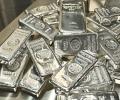
Silver and gold prices snapped a two-day rebound and declined sharply up to 10 per cent in the futures trade on Thursday amid weak trends in the international markets and a strong US dollar.

A significant structural shift is underway in India's gold market, with investment purchases projected to account for 35-40 per cent of total consumption by FY27, driven by geopolitical uncertainty, price momentum, and portfolio diversification.

'Allocating 5 to 10 per cent of one's portfolio and staying disciplined through market cycles helps in having a positive investment experience.'

The highlight in January, with no surprise, has been flows into gold and silver ETFs.

Analysts predict a surge in gold and silver prices as investors seek safe-haven assets due to escalating tensions in the Middle East. The impact on domestic prices will depend on the conflict's duration, with geopolitical factors and macroeconomic data also playing a role.

Analysts say long-term investors may still benefit, but recommend limiting bullion exposure to around 10 per cent.

Gold and silver prices experienced a significant drop in the national capital due to a global selloff driven by inflation concerns, central bank policies, and geopolitical tensions.

Direct plans of mutual fund schemes added nearly 21 million individual investor folios in FY26 (as of February), surpassing regular plans' 15 million net additions, marking only the second time direct plans have outpaced regular plans in annual folio growth, despite turbulent equity markets.

Domestic gold exchange-traded funds (ETFs) saw their holdings jump 65 per cent to 95 tonnes in 2025, elevating Indian ETFs to sixth place globally, going by holdings of the yellow metal. At the end of 2024, they ranked eighth with 57.5 tonnes of holding, according to an analysis of data from the World Gold Council (WGC).

India has emerged as the most impacted market within emerging economies, experiencing $3.7 billion in outflows over the past three weeks, matching the total outflows from the entire emerging market basket, as global equity funds turn negative for the first time since January 2026 due to escalating geopolitical tensions.

Equity mutual funds attracted Rs 29,911 crore in November, marking a 21 per cent increase from the preceding month, according to data released by industry body Amfi on Thursday. This rise in inflows comes after three consecutive months of decline, signalling an improvement in investor sentiment.

Passive funds have resumed gaining ground in the mutual fund (MF) industry after a slowdown in 2024, with their share of assets under management (AUM) reaching an all-time high in 2025. The surge has been driven largely by robust inflows into gold and silver exchange-traded funds (ETFs).
ilver continues to outperform the yellow metal, with the gold-to-silver price ratio declining to its lowest level since 2013. The ratio fell to around 57 on Wednesday in the international market, from a five-year high of 100.8 at the end of April 2025.

'We expect modest returns in 2026 versus the steep gains seen over the past few years.'

Gold ETFs attracted around Rs 11,700 crore, the highest in a calendar month.

Rediff explains why the system, not the Budget, is the problem.

The Indian commodity market has experienced significant growth over the past decade, allowing Indian traders to capitalise on price fluctuations in commodities such as gold, crude oil, and natural gas. Earlier, commodity trading required substantial capital as these contracts were only available in bulk quantities. But to make the commodity market more accessible, exchanges such as the Multi-Commodity Exchange (MCX) have launched smaller and more flexible commodities contracts, including mini and micro contracts. These changes in the commodity lot size have changed the way small traders trade in commodity markets.

Bitcoin has fallen from its peak of $1,26,251.3 on October 6, 2025, to $65,405.5, a decline of 48.2 per cent. Investors must recognise that sharp volatility is inherent to Bitcoin and avoid kneejerk reactions.

The recent correction suggests that while precious metals hedge geopolitical tension and inflation, they are not immune to sharp short-term corrections and profit-booking.

The gold and silver holdings of domestic mutual funds (MFs) crossed the Rs 1 trillion mark for the first time in September, powered by a blistering commodity rally that lifted precious metal prices and drew fresh inflows into dedicated MF schemes.

Gold prices dropped by Rs 4,100 to Rs 121,800 per 10 grams in the national capital and slipped below $4,000 an ounce in the global markets on Tuesday as easing US-China trade tensions dampened safe-haven appeal. According to the All India Sarafa Association, the precious metal had closed at Rs 125,900 per 10 grams on Monday.
Passive funds appeal to investors seeking to avoid the risk of underperformance by the fund manager and minimise the need for frequent chopping and changing of funds.

Sensex plunges over 1,400 points and Nifty slips near 22,250 amid Trump's Iran threat, rising crude oil prices, and FII selling. Here are the key reasons behind today's market crash.
Indian equities on Dalal Street saw volatility as global market trends and fresh tariff concerns linked to Donald Trump impacted investor sentiment. Track Sensex, Nifty50 movement and key market drivers for April 2, 2026.

As the rally in precious metals takes centre stage in 2025, most analysts recommend a larger allocation to gold over silver despite the latter's outperformance this year. In the current calendar year (CY25), spot gold prices in dollar terms rallied

Net inflows into equity mutual funds (MFs) moderated for the second straight month in September, declining 9 per cent during the month to Rs 30,422 crore. The slowdown came as redemptions from active equity schemes rose 30 per cent month-on-month (M-o-M) to a one-year high of around Rs 36,000 crore.

Mutual fund industry extended its bull run in 2025, adding a staggering Rs 14 lakh crore to its asset base and pushing total AUM to a record Rs 81 lakh crore by November, powered by surge in retail participation and record SIP inflows. Venkat Chalasani, chief executive officer of AMFI, told PTI that the industry's outlook remains positive, with steady SIP inflows continuing to offset foreign portfolio investor outflows and strengthening market resilience.

New investors should not allow themselves to fall prey to FOMO and rush headlong into gold.

Silver prices extended their record-breaking rally for a sixth straight session on Monday, surging 6 per cent to touch a lifetime high of Rs 2,54,174 per kilogram in futures trade amid strong investor demand and bullish global trends. On the Multi Commodity Exchange (MCX), silver futures for March delivery surged Rs 14,387, or 6 per cent, to hit a new record of Rs 2,54,174 per kilogram.

Gold's glittering rally is expected to continue, with prices likely to climb towards $4,500 per ounce in overseas markets, supported by sustained global central bank purchases, persistent geopolitical tensions, and strong Asian demand, according to a report by Motilal Oswal Financial Services Ltd. Silver, which has outperformed gold in terms of returns so far this year, is projected to climb to around $75 per ounce, aided by robust industrial consumption and a widening supply deficit, the report said.

The Indian metal market is a promising sector to invest in as it provides a good balance between the prospects of growth and stability in dynamic economic conditions and a changing geopolitical environment. Metals such as gold, silver, copper, etc, have gained renewed significance in 2025, amidst growing inflation and India's push towards infrastructural growth and green energy initiatives.
The Indian metal market is a promising sector to invest in as it provides a good balance between the prospects of growth and stability in dynamic economic conditions and a changing geopolitical environment. Metals such as gold, silver, copper, etc, have gained renewed significance in 2025, amidst growing inflation and India's push towards infrastructural growth and green energy initiatives.

'While investing in a silver ETF, one should be aware that it has historically exhibited higher price volatility than gold.'

Investors must account for currency depreciation in their financial plans and use instruments that can cushion the erosion in purchasing power.

'Increasingly, they treat gold as a financial asset in their portfolio rather than just as jewellery.'

'The pace of gold's ascent is striking, with prices rising from $3,500/oz to $4,000/oz in just 36 days -- far quicker than the historical average of 1,036 days taken to achieve similar $500/oz gains.'

'New investors should enter gradually and stay cautious.' 'Silver is a structural multi-year story, but timing matters in a high-volatility metal.'

With the listing of Reliance gold ETF on the National Stock Exchange (NSE) on Wednesday, four fund houses (Benchmark, UTI Mutual Fund and Kotak Mutual Fund being the other three) currently offer gold ETFs to Indian investors.
UTI Mutual Fund recently launched Gold Exchange Traded Funds and many more companies plan to follow suit. Get the lowdown.
 © 2026 Rediff.com - Advertise with us - Disclaimer - Privacy Policy - Sitemap - Feedback - About us - Terms of use - Grievances